










Can You Withdraw After Using a VPN for Online Poker? Geolocation, Bans and the Real Risks

Updated: Oct 16

Search for advice about using a VPN for online poker and you will usually receive one of two extreme answers.
Some people claim that a VPN lets you play poker from virtually anywhere without consequences.
Others insist that the moment a poker site detects one, your account will be closed and every dollar in your balance will be confiscated.
The reality is more complicated.
Using a VPN does not automatically mean that you will lose your bankroll. Players have used VPNs, passed verification checks and completed withdrawals successfully.
However, this does not mean that VPN use is officially permitted, safe or guaranteed to be tolerated in the future.
Poker sites do not evaluate only the presence of a VPN. They can consider the player’s identity, physical location, device, payment activity, account history and relationship with the room.
Some operators also use advanced geolocation systems that go far beyond checking an IP address.
The uncomfortable truth is that technical access, silent tolerance and formal permission are three completely different things.
Table of Contents
🌐 What Does a VPN Actually Change?
A virtual private network routes your internet connection through a remote server.
Instead of seeing only the IP address assigned by your normal internet provider, the poker room sees the IP address and approximate location of the VPN server.
VPNs have many legitimate uses.
People may use them to:
protect their connection on public Wi-Fi;
improve online privacy;
connect securely to a company network;
reduce tracking;
access personal services while travelling.
Therefore, detecting a VPN does not automatically prove that a poker player is cheating or attempting to break geographical restrictions.
However, a VPN weakens one of the signals a poker room uses to identify the player and establish their location.
That matters because the room may need to determine whether the player is:
physically located in an accepted country;
personally controlling the account;
using more than one account;
returning after a previous closure;
sharing a device with another player;
using remote-access software;
providing truthful registration information;
complying with local gambling restrictions.
The VPN is therefore not always the entire problem.
The real question is what the VPN may be hiding.
📍 How Does Online Poker Geolocation Really Work?
A VPN primarily changes the network location visible through the player’s IP address.
Modern geolocation systems can examine much more.
Depending on the operator, device and jurisdiction, location verification may combine:
IP location;
nearby Wi-Fi networks;
GPS information;
cellular or GSM signals;
local-network information;
device permissions;
known VPN and proxy databases;
remote-access indicators;
device history;
account activity.
This is especially common in regulated markets where the poker room must prove that the player is physically located inside an authorized territory.
For example, PokerStars’ Ontario geolocation documentation explains that its systems can use Wi-Fi, GPS and GSM signals. It states that the more network signals available, the more accurately the platform can establish the player’s location. (PokerStars)
On some computers, PokerStars also requires GeoComply’s Player Location Check software. PokerStars describes the software as a tool designed to detect VPN location fraud and says that physical-location checks are required before real-money access in Ontario. (PokerStars)
This means that changing an IP address does not necessarily change the location detected by the poker room.
A VPN may indicate that the connection originates in one country while Wi-Fi, GPS, device and account data suggest something completely different.
That inconsistency can be more suspicious than an ordinary connection from the player’s real location.

🔌 Can Ethernet Defeat Poker Geolocation?
Online poker geolocation is not perfect.
Legitimate players can sometimes be incorrectly blocked because their device does not provide enough information or because one of the available signals is inaccurate.
Ethernet is relevant because some desktop geolocation systems use nearby Wi-Fi networks as environmental reference points.
A computer connected through an Ethernet cable with Wi-Fi disabled may provide fewer location signals.
This can result in:
a failed geolocation check;
an inaccurate location result;
a request to activate Wi-Fi;
temporary inability to join real-money games.
This demonstrates that geolocation systems have technical limitations.
However, it does not mean that connecting through Ethernet automatically defeats them.
In many cases, removing Wi-Fi data simply makes the geolocation system less confident and causes the verification to fail.
Even when one location signal is unavailable, the operator may still examine:
the IP address;
device information;
account history;
registration details;
payment methods;
previous login locations;
remote-access software.
No geolocation system is completely free from errors. Legitimate players can be blocked when their devices provide too few reliable location signals.
However, the absence of a Wi-Fi signal should not be described as a dependable bypass. In many cases, a computer connected through Ethernet with Wi-Fi disabled simply fails the verification because the system cannot collect enough environmental data.
But successfully entering a poker client does not prove that the account has passed every security check. Inconsistencies can emerge later, particularly during a withdrawal or account review.
The correct distinction is:
A VPN changes a network signal. Geolocation attempts to determine the physical location of the device.
They are related, but they are not the same thing.
🚫 Why Do Poker Sites Dislike VPNs?
Poker rooms must protect themselves from more than players entering from restricted countries.
They also need to detect:
identity fraud;
account sharing;
multiple accounts;
collusion;
previously banned users;
stolen payment methods;
money laundering;
self-exclusion circumvention;
remote control of another device.
A normal residential connection gives the operator several signals that can be compared with the account.
These may include:
the registered country;
identity documents;
residential address;
payment origin;
device history;
previous login locations.
A VPN can create inconsistencies between them.
For example, a player may submit documents from one country, deposit through a payment method associated with another and connect repeatedly through VPN servers in several unrelated jurisdictions.
This does not prove fraud by itself.
But it increases uncertainty, and uncertainty is exactly what compliance and game-integrity teams are designed to investigate.
That is why many poker sites treat VPN use as a risk indicator rather than as an isolated technical detail.
💰 Can You Withdraw After Using a VPN for Online Poker?
Yes, it can be possible to withdraw after using a VPN.
A VPN is not an automatic confiscation button.
The outcome can depend on:
the poker room’s current terms;
the player’s real country;
whether that country is accepted;
why the VPN was active;
whether the account is verified;
whether the player provided truthful information;
whether multiple accounts are involved;
whether suspicious payment activity exists;
whether the VPN was used accidentally or systematically;
whether the room can confidently identify the player.
Consider two very different situations.
A verified player accidentally leaves a VPN active
The player lives in an accepted country, uses their real identity and owns only one account.
They forget that a privacy VPN is running and open the poker client.
The operator may block the login, request an explanation, ask the player to disconnect the VPN or perform an additional verification check.
This is not necessarily treated in the same way as deliberately pretending to live in another jurisdiction.
A player disguises their country and identity
The player lives in a prohibited jurisdiction, selects a VPN server in an accepted country, provides inaccurate registration information and uses another person’s payment method.
The VPN is now part of a broader attempt to defeat the operator’s controls.
That creates location, identity, payment and potential fraud concerns.
The two situations involve the same technology, but they do not present the same risk to the poker room.

⚖️ Tolerance Is Not the Same as Permission
This is the distinction that most public discussions miss.
A poker room may detect a VPN and take no immediate action.
That does not necessarily mean that the room has officially approved it.
The operator may have decided that:
the account presented little immediate risk;
the player’s identity was already known;
the real country was not prohibited;
the VPN appeared to be accidental;
a trusted partner had verified the player;
a warning was more appropriate than closure;
the case did not justify a full investigation at that moment.
This is operational tolerance.
It is not formal permission.
A player cannot safely assume:
“I used the same VPN last year and successfully withdrew, so the poker room must allow it.”
A previous cashout proves only that the previous cashout was processed.
It does not guarantee that:
the next withdrawal will not be reviewed;
the room’s internal procedures will remain unchanged;
new geolocation systems will not detect additional inconsistencies;
a regulator will not demand stricter enforcement;
accumulated account data will not trigger a later investigation.
Silent tolerance creates no permanent right for the player.
This is also why poker rooms rarely acknowledge flexible enforcement publicly.
A room may assess genuine players individually while maintaining strict public terms that allow it to act against location masking whenever necessary.

🏢 Which Poker Sites Are Strictest About VPNs and Geolocation?
Not every poker room verifies location in the same way.
GGPoker and WPT Global publish particularly strict rules against location masking. Regulated platforms such as PokerStars Ontario go further because they must positively confirm that the device is physically located inside an authorized jurisdiction.
These are two different forms of control: one is primarily designed to enforce country restrictions and account integrity, while the other is a formal licensing requirement.
International platforms may use location controls to enforce restricted-country policies, identify accounts and reduce fraud.
Regulated platforms may be legally required to positively confirm that the device is physically inside a permitted territory.
GGPoker
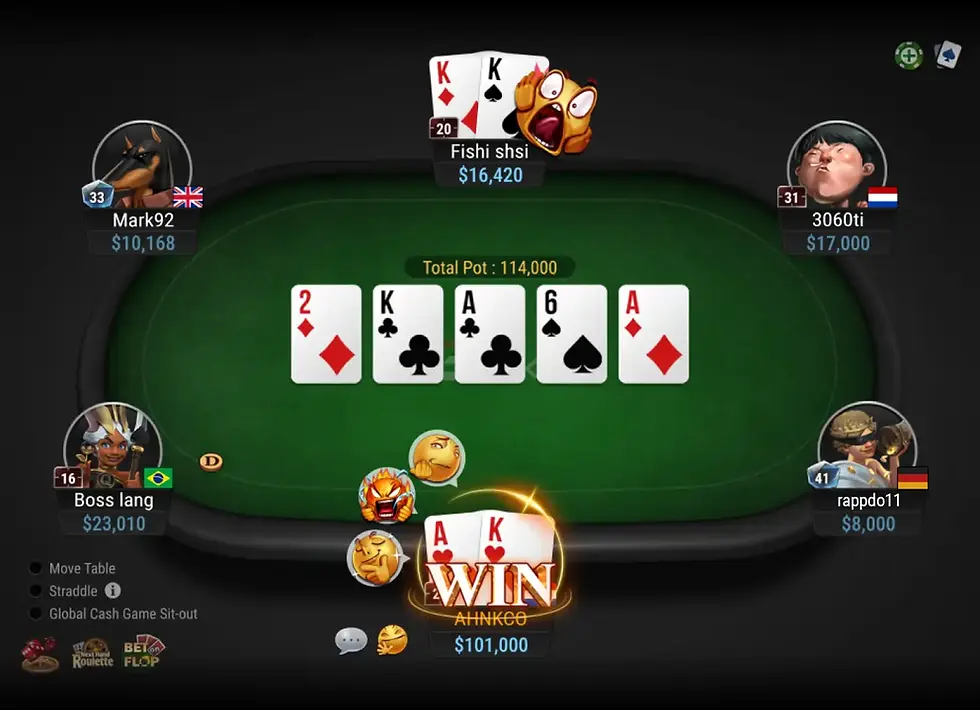
GGPoker is particularly strict about VPNs, proxies and location inconsistencies.
Its official support documentation states that VPNs, proxies and SmartDNS services are strictly prohibited under its Security & Ecology Policy. It also warns that an IP address inconsistent with the registered country can prevent access.
GGPoker’s 2026 account guidance goes further: using a VPN to play from a restricted country can result in immediate account closure and potential forfeiture of funds.
The precise treatment of the balance can depend on the relevant GGPoker entity and its terms. For example, GGPoker’s European terms distinguish between winnings and bonuses, which may be confiscated, and the remaining balance, which may be returned subject to charges and regulatory requirements.
Players should therefore not assume either that every dollar will automatically be taken or that their full balance is protected.
The company separately advises players who use VPNs for ordinary privacy to disconnect them while playing.
This distinction is important.
GGPoker’s Security & Ecology Policy also allows the operator to request Proof of Presence when it wants to verify a player’s actual location.
This is important because a normal identity document or proof of address does not necessarily establish where the player was physically located while playing.
GGPoker’s current policy explicitly prohibits VPNs, proxies and alternative methods intended to mask a player’s actual location or identity. It also prohibits using those tools to play from a restricted region.
This makes GGPoker particularly strict not only about the IP address, but also about the player’s ability to prove their real physical whereabouts when requested.

WPT Global

WPT Global also uses exceptionally broad language.
Its terms prohibit any attempt to hide, mask or alter either:
the player’s location; or
the identity of the device used to access the platform.
Its terms prohibit any attempt to hide or mask the player’s location. They specifically include the use of a VPN, proxy, geolocation service or application to hide, mask or alter either the location or the identity of the device used to access the platform.
This wording is broader than a basic prohibition against changing an IP address. It also covers attempts to manipulate how the device itself is identified.
For this reason, WPT Global should be considered one of the stricter international poker platforms regarding VPNs and location masking.
PokerStars in regulated markets
PokerStars applies a different level of control in regulated markets where physical presence must be verified.
Its Ontario documentation explains that Wi-Fi, GPS and GSM signals may be used to establish the player’s location.
PokerStars also identifies GeoComply as software intended to detect VPN location fraud.
The global PokerStars help centre uses less categorical wording, stating that VPNs and proxy servers are not recommended because they can interfere with connecting, playing and depositing.
The distinction is therefore between:
general VPN restrictions on the international platform; and
legally required physical-location verification in regulated markets.
WSOP Online
WSOP Online also relies on geolocation in regulated US markets.
Players must be physically located inside an authorized state while playing, even when they normally reside elsewhere.
WSOP has historically advised travelling players to test their accounts and geolocation before major online events because a failure to verify location can prevent tournament registration or play.
WSOP has also publicly discussed the use of GeoComply technology to support regulated online poker geolocation.
In these markets, changing the apparent IP address is not enough. The platform needs evidence that the device itself is physically located within the permitted boundaries.
🌍 International Restrictions and Regulated Geolocation Are Not the Same
The distinction between these systems is essential.
International poker rooms
International operators such as GGPoker and WPT Global may use location information to:
enforce restricted-country lists;
reduce fraud;
verify identity;
prevent multiple accounts;
satisfy payment providers;
protect licences and commercial relationships.
The exact depth of their geolocation technology is not always made public.
Regulated poker markets
In markets such as regulated US states or Ontario, the operator may need to prove that the player is physically located inside a specific boundary whenever real-money play occurs.
The system therefore looks for positive location evidence.
It is not enough for the player to avoid appearing outside the jurisdiction.
The room may require signals demonstrating that the device is actually inside it.
In both systems, a VPN can create problems.
But regulated geolocation is generally more intrusive because physical presence is a licensing requirement rather than only an internal risk decision.
🤝 Why Can a Trusted Poker Agent Matter?
A reliable poker agent does not make prohibited activity legal.
An agent cannot rewrite a poker room’s terms, override a regulator or guarantee that an account will never be investigated.
However, a trusted agent can reduce one of the operator’s biggest concerns:
uncertainty about who is behind the account.
An established agent may be able to:
verify that the player is a real person;
check their identity before registration;
explain the origin of funds;
maintain consistent payment records;
clarify the player’s real country;
communicate directly with the club, skin or network;
resolve an accidental VPN issue;
confirm whether the room currently accepts the player;
prevent the account from being opened incorrectly.
The agent’s reputation also has commercial value.
A partner who has introduced legitimate players over a long period is not evaluated in the same way as an unknown person producing anonymous accounts with inconsistent information.
This is the uncomfortable part that is rarely discussed publicly.
In our experience, known and properly verified players may be assessed differently from anonymous accounts showing multiple risk signals.
A player whose identity, country and payment history are already known can create less uncertainty than a new account with inconsistent information.
This does not mean that an agent can authorize prohibited VPN use, override a poker room’s terms or guarantee a future withdrawal.
It means that risk is assessed in context.
The role of a legitimate agent is not to make the player disappear from the operator’s controls.
A good agent makes the player more identifiable, not less.

🔍 What Happens When a VPN Is Detected During a Withdrawal?
Withdrawals often generate more scrutiny than ordinary logins.
Deposits move money into the platform.
Withdrawals move money out and can trigger identity, payment, anti-fraud and anti-money-laundering checks.
During a withdrawal review, a poker room may compare:
recent IP addresses;
device fingerprints;
physical-location signals;
registration details;
identity documents;
payment history;
gameplay patterns;
links with other accounts;
previous security alerts;
remote-access indicators.
Several outcomes are possible.
The withdrawal is processed normally
The room does not consider the VPN relevant enough to delay payment.
This can happen, but it should not be interpreted as permanent permission.
The player is asked to disable the VPN
The room may require a normal connection before allowing further play or account activity.
Additional verification is requested
The player may be asked for:
identification;
proof of address;
payment statements;
source-of-funds information;
evidence of recent travel;
an explanation of unusual login locations.
The withdrawal is delayed
The payment may remain pending while the security or compliance team investigates.
A pending withdrawal does not automatically mean that the money has been confiscated.
The account is restricted or closed
This becomes more likely when the VPN was used from a prohibited country or when it appears alongside:
false registration information;
multiple accounts;
payment methods belonging to other people;
remote-access software;
suspicious gameplay;
repeated warnings.
Winnings, bonuses or part of the balance may be forfeited
Some operators reserve the right to confiscate winnings, bonuses or funds when a player deliberately accesses the platform from a restricted jurisdiction.
The exact outcome depends on the operator, the applicable terms and the facts of the case. In some terms, deposited funds, winnings and bonuses are treated differently.
Players should therefore avoid both extreme assumptions: that the poker room will automatically confiscate everything, or that the original deposit must always be returned without conditions.
🌍 Using a VPN From a Restricted Country Is a Different Risk
There is a major difference between using a VPN for privacy and using one to misrepresent your physical location.
A country may be restricted because of:
local gambling laws;
licensing conditions;
sanctions;
payment limitations;
commercial decisions;
responsible gaming requirements;
network policy.
A VPN does not change any of those underlying conditions.
It only changes one of the signals visible to the operator.
Therefore:
accessing the website does not prove eligibility;
creating an account does not prove eligibility;
making a deposit does not prove eligibility;
playing successfully does not prove eligibility;
completing one withdrawal does not create permanent approval.
The most dangerous moment to discover a country restriction is after building a substantial balance or winning a major tournament.
Players should establish whether they can legitimately be accepted before registering and depositing.
📈 Why Are Poker Sites Becoming More Restrictive?
Parts of the international poker industry historically operated with significant flexibility.
Some operators focused mainly on whether:
the player was genuine;
the games were secure;
deposits were legitimate;
withdrawals could be verified.
However, poker rooms now face greater scrutiny regarding cross-border gambling, player location, payment processing and access from restricted markets.
This creates several pressures.
Operators need to:
protect licences;
preserve banking and payment relationships;
avoid regulatory action;
demonstrate effective geographical controls;
prevent fraud;
protect their reputation;
answer public criticism about restricted-country access.
As a result, practices that may previously have been handled quietly are becoming harder to tolerate.
An operator can also become stricter without announcing that it previously handled cases differently.
Public rules normally reserve the broadest enforcement powers available to the room.
Internal security teams can still examine individual circumstances, but they have less freedom to overlook repeated or deliberate location manipulation.
What was silently tolerated yesterday may become unacceptable tomorrow.
🛑 When Does VPN Use Become Much More Serious?
VPN use becomes significantly more dangerous when it is connected to other violations.
False identity information
Registering with a false name, address or country creates a much larger problem than the VPN alone.
Documents belonging to another person
This can make it impossible for the operator to determine who legally owns the account and its funds.
Multiple accounts
Using a VPN to hide additional accounts can turn a location issue into a game-integrity violation.
Third-party payment methods
Depositing or withdrawing through another person’s wallet, card or bank account creates additional fraud and anti-money-laundering concerns.
Remote-access software
Controlling a computer located in another country can raise questions about account sharing and the real person operating the account.
Self-exclusion circumvention
Using another location or account to avoid responsible gaming restrictions is particularly serious.
Collusion, bots or prohibited software
When a VPN appears alongside suspicious gameplay or prohibited tools, it may be interpreted as part of a deliberate attempt to conceal cheating.
Repeatedly ignoring warnings
An accidental login is different from continuing to disguise a location after the room has explicitly told the player to stop.
The more inconsistencies surrounding the account, the less likely the operator is to view the VPN as an innocent privacy tool.
✅ What Should Players Do Before Depositing?
The safest time to solve a location problem is before money enters the account.
Before registering:
Check whether your real country is accepted.
Read the room’s current restricted-country policy.
Ask for clarification when the rules are unclear.
Use your real identity and personal payment methods.
Do not assume that technical access equals permission.
Do not rely on another player’s old withdrawal experience.
Keep registration, documents and payment information consistent.
Discuss unusual circumstances with a trusted agent before opening the account.
If you accidentally accessed a room with a VPN active, do not make the situation worse.
Do not:
open another account;
submit false documents;
invent a different residence;
move funds through someone else;
provide a fabricated explanation.
Disable the VPN and respond honestly if the poker room asks for clarification.
Trying to hide a minor connection anomaly can transform it into a serious identity or compliance problem.
💭 Final Thoughts
Using a VPN for online poker does not automatically mean that your account will be closed or that your entire bankroll will be confiscated.
That claim is too simplistic.
Poker rooms can evaluate:
why the VPN was used;
the player’s actual country;
identity verification;
payment activity;
device history;
physical geolocation;
account behaviour;
the presence of other security concerns.
In our experience, poker rooms may distinguish between a known, verified player and an anonymous account showing several fraud or identity risks. However, an agent relationship does not turn silent tolerance into formal permission.
But tolerance is not permission.
It does not override the poker room’s terms, create a permanent right to play or guarantee a future withdrawal.
Geolocation also changes the equation.
A VPN may change the visible IP address, while modern location systems can examine Wi-Fi, GPS, cellular signals, device data and account history.
These systems are not infallible. Legitimate players can be incorrectly blocked, and no technical solution detects every sophisticated manipulation immediately.
But passing one location check does not mean that the account is safe from a later review.
The most accurate conclusion is:
A VPN is not an automatic confiscation button, but silent tolerance is not a contractual right. A geolocation check can fail, but a temporary technical success is not permanent approval.
Do not wait until you have made a large deposit or won a major tournament to discover that your country or account setup creates a problem.
Contact The Poker Broker on Telegram before registering or depositing.
We can help you understand which rooms may be suitable for your country, preferred games and payment requirements without making unrealistic guarantees about VPNs or restricted access.
If privacy and verification requirements are part of your site-selection decision, compare our best no KYC poker sites guide before depositing.
Access to WPT Global can depend on the player’s country and account setup. Contact The Poker Broker on Telegram before registering if your location creates uncertainty.
❓ Frequently Asked Questions
Can a poker site detect a VPN?
Yes.
Poker sites can identify many known VPN and proxy addresses. They may also compare the IP location with device history, identity documents, payment activity and physical geolocation signals.
VPN detection is not perfect, but players should never assume that a VPN makes them invisible.
Can poker sites detect my physical location?
Some can.
In regulated markets, poker platforms may use Wi-Fi, GPS, cellular networks, local-network information and specialized software to establish the physical location of the device.
International poker rooms may use different combinations of location, account and device data.
Can I withdraw after using a VPN?
It may be possible.
The result depends on the poker room, the player’s real country, the reason for the VPN, account verification and whether any other violations are present.
A successful withdrawal is possible, but it is not guaranteed.
Will a poker site automatically confiscate my funds?
Not automatically.
An accidental VPN connection from an accepted country may result in a warning, blocked login or additional verification rather than confiscation.
Deliberately masking a restricted location can lead to account closure and the forfeiture of winnings, bonuses or funds under the room’s terms. The treatment of the original deposit and remaining balance may vary between operators and jurisdictions.
Can Ethernet bypass poker geolocation?
Not reliably.
A computer connected by Ethernet with Wi-Fi disabled may provide fewer environmental signals. This can cause the geolocation check to fail or ask the player to enable Wi-Fi.
It does not automatically change or conceal the device’s physical position.
Why does a poker site ask me to enable Wi-Fi when I use Ethernet?
The system may use nearby Wi-Fi networks as location reference points, even when the player is not connected to them.
Enabling Wi-Fi can provide additional information that helps confirm physical location.
Are GGPoker and WPT Global strict about VPNs?
Yes.
GGPoker explicitly prohibits VPNs, proxies and SmartDNS under its security policy and warns of severe consequences for restricted-country access.
WPT Global prohibits attempts to hide or alter location or device identity through VPNs, proxies and geolocation tools.
Is accidental VPN use treated like deliberate location masking?
Not necessarily.
A legitimate player in an accepted country who accidentally leaves a privacy VPN active presents a different risk from someone intentionally disguising a prohibited location and providing false account information.
However, the final decision belongs to the operator.
Does using an agent make a VPN safe?
No.
A trusted agent can verify the player, clarify account eligibility and communicate with the room.
An agent cannot guarantee that a poker site will ignore its policies or accept a player from a prohibited jurisdiction.
Why was my first withdrawal approved but my next one reviewed?
Security checks are not identical for every transaction.
A larger withdrawal, new device, unusual IP address, different payment method or accumulated account history can trigger additional verification.
A previous successful cashout does not guarantee all future withdrawals.
Should I ask the poker room whether I can use a VPN?
Yes, particularly when you live in an accepted jurisdiction and use a VPN for general privacy.
Explain your real country and reason for using it clearly. Keep any answer in writing, but remember that the room’s current terms remain the controlling policy.