














The Evolution of Online Poker: From Moneymaker to Crypto

Updated: Sep 3

The Game Never Stopped Changing
If you stopped playing online poker ten years ago, you probably wouldn’t recognize today’s industry.
Back then, almost everyone played on a handful of major websites.
PokerStars dominated the market.
Full Tilt Poker hosted the biggest high-stakes games in the world.
PartyPoker was still one of the largest poker rooms on the planet.
Most players deposited with a credit card or bank transfer, opened a few No-Limit Hold’em tables on their desktop computer and grinded for hours.
Today’s poker ecosystem looks completely different.
Players compete on traditional poker sites, crypto poker rooms and private poker apps.
Many use stablecoins like USDT instead of bank transfers.
Some grind from their phones instead of a desktop PC.
Artificial intelligence has changed how players study the game, while private poker clubs have created entirely new player pools outside traditional networks.
Online poker didn’t die.
It evolved.
Understanding that evolution helps explain why today’s games look so different from those that existed twenty years ago.
Let’s go back to where it all started.
The Moneymaker Effect
Every great story has a turning point.
For online poker, that moment arrived in 2003.
An unknown accountant named Chris Moneymaker qualified for the World Series of Poker Main Event through an online satellite.
His buy-in cost just $86.
Against all expectations, he went on to win the tournament and the world championship.
Millions of people watched an amateur defeat some of the biggest names in poker.
For the average viewer, the message was simple.
“If he can do it, maybe I can too.”
That single victory completely changed the perception of poker.
Instead of looking like a game reserved for professionals, poker suddenly became a game that anyone could learn.
Within months, online poker exploded.
Thousands of new players created their first accounts.
Satellite tournaments became incredibly popular.
Cash games were running around the clock.
The “Moneymaker Effect” had begun.

The First Online Poker Boom
Between 2003 and 2008, online poker experienced unprecedented growth.
This period is often remembered as the industry’s golden age.
Every month, thousands of recreational players joined the tables.
The average skill level was relatively low compared to today’s standards.
Strategy books were still the main learning resource.
Training videos barely existed.
Most players relied on instinct, experience and simple concepts like pot odds and position.
It wasn’t unusual to find multiple weak players sitting at every cash game table.
Making a consistent profit was considerably easier than it is today.
The Rise of the Poker Giants
Several poker rooms became household names during this period.
PokerStars
PokerStars quickly established itself as the industry’s benchmark.
Reliable software.
Massive tournament guarantees.
Excellent customer support.
Huge player pools.
Winning the WSOP Main Event through PokerStars satellites became a dream shared by thousands of players every year.
Full Tilt Poker
If PokerStars was the biggest poker room…
Full Tilt Poker became the coolest.
The site featured some of the world’s most famous professionals.
Players like Phil Ivey, Tom Dwan, Patrik Antonius and Gus Hansen became the faces of the brand.
Watching the highest cash games in the world became entertainment in itself.
For many players, Full Tilt represented the glamorous side of online poker.

PartyPoker
Before PokerStars completely dominated the market, PartyPoker was already attracting enormous traffic.
For several years it was one of the largest poker rooms in the world.
Its success helped demonstrate that online poker could become a truly global industry.
The High Stakes Era
This was also the period that created many poker legends.
Millions of poker fans followed the incredible online battles between players like:
Tom “durrrr” Dwan
Patrik Antonius
Phil Ivey
Viktor “Isildur1” Blom
Pot after pot.
Million-dollar swings.
Six-figure bluffs.
These games attracted audiences comparable to major sporting events within the poker community.
For the first time, online poker wasn’t simply a way to play cards.
It had become entertainment.
Forums exploded with hand histories.
YouTube clips went viral.
Poker television reached its peak.
The entire industry seemed unstoppable.
Why The Games Were So Soft
Many newer players hear stories about the “good old days.”
Those stories aren’t just nostalgia.
The games really were softer.
Why?
Because the poker boom was driven by recreational players.
Most people had never studied poker seriously.
There were no advanced solvers.
Very few coaching sites existed.
Training content was limited to books, forums and a handful of strategy videos.
Many players didn’t even understand concepts that are considered basic today, such as balanced ranges, continuation betting frequencies or exploitative adjustments.
Simply playing tighter than your opponents was often enough to build a profitable bankroll.
For skilled players, the opportunities seemed endless.
The Industry Was Growing Faster Than Anyone Expected
By the late 2000s, online poker looked unstoppable.
New poker rooms appeared every year.
Tournament guarantees kept increasing.
Affiliate websites flourished.
Professional poker became a realistic career path for thousands of players.
Many believed the industry’s growth would continue indefinitely.
But behind the scenes, a major problem was developing.
It had nothing to do with poker strategy.
It had nothing to do with player pools.
It had everything to do with regulation and banking.
And in 2011, the entire industry would be forced to confront that reality.
Black Friday: The Day Everything Changed
On April 15, 2011, the online poker industry experienced its biggest shock.
The U.S. Department of Justice unsealed indictments against the founders of PokerStars, Full Tilt Poker and Absolute Poker, seized their .com domains and accused them of violating U.S. gambling laws and processing payments through deceptive methods.
For American players, it felt like online poker had disappeared overnight.
For the rest of the world, it became a wake-up call.
The industry’s biggest weakness had finally been exposed.
It wasn’t poker.
It was the financial system behind it.

The Real Problem Was Never the Cards
When people talk about Black Friday, they usually remember the poker rooms.
But the real issue was much deeper.
Online poker depended almost entirely on traditional financial institutions.
Every deposit.
Every withdrawal.
Every tournament buy-in.
Everything passed through banks, credit card companies and payment processors.
Once those channels became unreliable, the entire ecosystem suffered.
Players suddenly faced:
Declined credit cards
Delayed withdrawals
Frozen payment processors
Expensive international wire transfers
Growing uncertainty about where their money actually was
For professionals, this wasn’t just inconvenient.
It threatened their careers.
Imagine trying to run a business without knowing when—or if—you’ll be able to access your own funds.
That’s exactly what many poker players experienced.
Full Tilt: A Crisis of Confidence
If Black Friday damaged the industry…
The collapse of Full Tilt Poker shattered player confidence.
When the site stopped processing withdrawals, thousands of players were left waiting for money they believed was safely held in their accounts.
Many professionals had six-figure bankrolls locked on the platform.
Some had even more.
The incident reminded everyone that choosing a poker room wasn’t only about software or traffic.
Trust mattered.
Financial stability mattered.
Player fund security mattered.
Those lessons continue to influence how serious players choose poker rooms today.
The End of One Era
Before 2011, most players simply chose the largest poker room.
PokerStars.
Full Tilt.
PartyPoker.
That was usually enough.
After Black Friday, things became much more complicated.
Players started asking different questions.
Is my bankroll safe?
Can I actually withdraw my money?
Which countries are accepted?
Which payment methods work reliably?
Poker wasn’t changing only at the tables.
It was changing behind the scenes.
Regulation Reshaped the Industry
As governments introduced new gambling regulations, many countries moved away from global player pools.
Instead, they created ring-fenced markets.
Countries such as Italy, France and Spain required licensed operators to keep local players inside their own national pools.
The objective was consumer protection and regulatory oversight.
The consequence was smaller player pools.
Instead of competing against players from around the world, many grinders suddenly found themselves limited to opponents within a single country.
For recreational players, this often went unnoticed.
For professionals, it changed everything.
Smaller liquidity meant:
Fewer games running.
Smaller tournament guarantees.
Less action during off-peak hours.
Tougher regulars playing each other more often.
The online poker landscape had become fragmented.
The Rise of Global Liquidity
While regulated markets continued to grow locally, another part of the industry moved in a different direction.
International poker rooms focused on global liquidity
.
Rather than separating players by country, they connected large international player pools together.
This created several advantages.
More games.
More tournaments.
Better table selection.
Action around the clock.
For many grinders, global liquidity became one of the biggest reasons to play on international poker platforms instead of ring-fenced markets.
Today, it’s one of the first things experienced players look at when evaluating a poker room.
Players Started Looking Beyond Traditional Poker Sites
As the industry adapted, players became more open to alternatives.
Instead of automatically choosing the biggest brand, many began exploring platforms that offered:
Softer games.
Better rakeback.
Faster withdrawals.
Global player pools.
More flexible payment methods.
This shift would eventually lead to the rise of mobile poker apps, private poker clubs and, later, crypto-native poker rooms.
The industry wasn’t shrinking.
It was evolving.
And another revolution was already beginning—one driven not by regulation, but by technology.
Online Poker Became Much Tougher
The years following Black Friday didn’t just change where people played.
They changed how people played.
During the poker boom, many winning players built their edge simply by understanding the fundamentals.
Play tight.
Value bet your strong hands.
Bluff occasionally.
Punish obvious mistakes.
That was often enough to beat most games.
But as the industry matured, something else happened.
Players started studying poker like never before.

The Rise of Poker Training
Around the early 2010s, poker education exploded.
Instead of relying on books and forum discussions, players suddenly had access to professional training videos, coaching programs and entire communities dedicated to improving strategy.
For the first time, recreational players could learn directly from high-stakes professionals.
Content that was once reserved for elite players became available to anyone willing to study.
Winning at poker was no longer just about experience.
It became about preparation.
Solvers Changed the Game Forever
Perhaps no innovation has had a bigger strategic impact than poker solvers.
Software capable of calculating balanced strategies completely changed how professionals approached the game.
Concepts like:
Range vs. range thinking
Minimum Defense Frequency
Balanced bluffing frequencies
Mixed strategies
Indifference
became part of everyday poker vocabulary.
Even players who never opened a solver benefited indirectly, as strategy content became dramatically more sophisticated.
Modern poker isn’t just about reading opponents.
It’s about understanding entire ranges and making mathematically sound decisions.
The Average Player Improved
One of the biggest differences between 2006 and today isn’t the software.
It’s the average opponent.
Years ago, many players had little understanding of concepts like position, bankroll management or continuation betting.
Today, even low-stakes regulars often:
Study hand histories.
Watch coaching videos.
Review sessions.
Use tracking software where allowed.
Analyze spots with modern training tools.
As a result, the average skill level has increased significantly.
Games that were once extremely profitable became far more competitive.
Does That Mean Online Poker Is No Longer Beatable?
Absolutely not.
This is one of the biggest myths in modern poker.
Yes, today’s players are stronger.
But poker itself has also evolved.
New poker rooms have emerged.
Global player pools have expanded.
Private poker clubs have introduced entirely new ecosystems.
Recreational players continue to discover poker every day.
In fact, many experienced grinders believe game selection has become more important than pure technical skill.
Choosing the right poker room can often have a greater impact on your results than memorizing another solver output.
That’s one of the main reasons why more players are exploring alternatives beyond traditional poker sites.
The Mobile Revolution
For many years, online poker meant sitting in front of a desktop computer.
Multiple monitors.
HUDs.
Tracking software.
Long grinding sessions.
That image still exists today.
But it no longer represents the entire industry.
The biggest shift of the last decade has been the rise of mobile poker.
Millions of players now enjoy poker directly from their smartphones or tablets.
For recreational players, it’s simply more convenient.
For operators, it opens the door to an entirely new audience.
Poker is no longer something you only play at home.
You can play during your commute, while traveling or from virtually anywhere.
That change has fundamentally transformed the market.
The Rise of Poker Apps
The mobile revolution also gave birth to a completely different type of poker platform.
Instead of traditional downloadable poker clients, a growing number of players moved toward app-based ecosystems.
Platforms such as ClubGG, KKPoker and QQPK helped popularize a more flexible approach to online poker.
Many of these apps introduced features designed for modern players:
Mobile-first interfaces.
Faster game discovery.
Built-in social features.
Simplified tournament registration.
Private clubs and communities.
For many players, poker became more accessible than ever before.
Private Poker Clubs Changed the Industry
One of the biggest innovations wasn’t technological.
It was structural.
Private poker clubs created entirely new poker ecosystems.
Instead of everyone joining the same public lobby, players could become members of private communities managed by trusted club owners and brokers.
This model offered several advantages.
Communities could grow independently.
Games could be organized more efficiently.
Players often enjoyed dedicated support, exclusive promotions and more personalized service than traditional poker rooms could provide.
Today, private poker clubs represent an important part of the global online poker ecosystem and continue to attract both recreational players and experienced grinders.
A New Revolution Was About to Begin
Just as players were adapting to mobile poker and private clubs, another innovation quietly started changing the industry.
This time, it wasn’t about software.
It wasn’t about strategy.
It wasn’t even about poker itself.
It was about money.
The arrival of Bitcoin, followed by stablecoins such as USDT, would solve many of the payment problems that had existed since Black Friday and help create the next major chapter in the evolution of online poker.
Crypto Started the Second Poker Revolution
For years after Black Friday, one problem never truly disappeared.
Moving money.
Banks became increasingly cautious.
International transfers were often slow.
Some payment methods worked in one country but not another.
For players grinding across international poker rooms, managing a bankroll could be almost as frustrating as the games themselves.
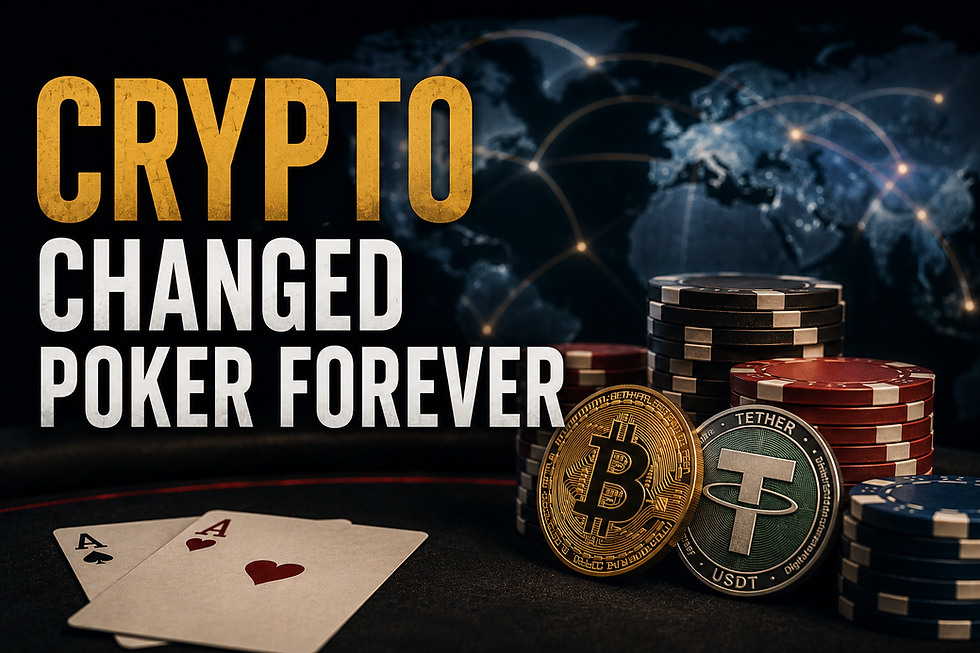
Then cryptocurrency entered the picture.
At first, many poker players dismissed Bitcoin as a speculative investment.
Few imagined it would eventually become one of the biggest innovations in online poker payments.
Looking back, it changed far more than most people expected.
ACR Was One of the First Major Poker Rooms to Embrace Bitcoin
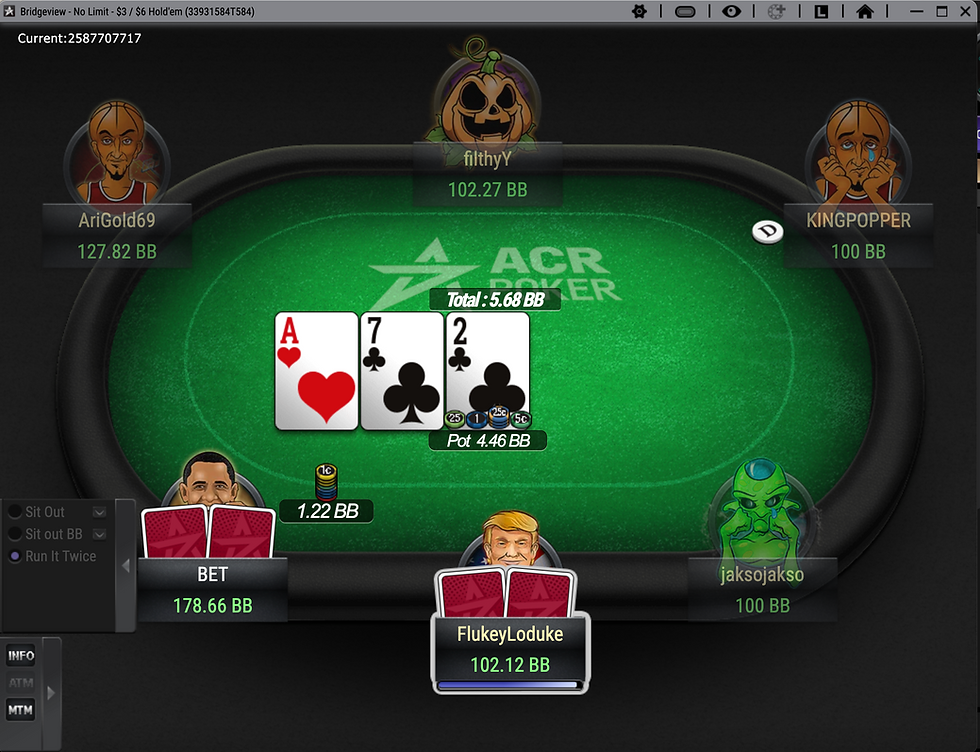
While many operators were still relying almost exclusively on banks and credit cards, ACR Poker saw the potential of cryptocurrency.
It became one of the first major online poker rooms to support Bitcoin deposits and withdrawals, giving players an alternative to traditional banking.
The advantages were immediately obvious.
Instead of waiting several business days for an international wire transfer, players could move funds much faster.
Transactions were available 24 hours a day.
Borders mattered far less.
Although Bitcoin wasn’t perfect, ACR demonstrated that cryptocurrency could become a practical payment solution for online poker.
Looking back, that decision was years ahead of its time.
Bitcoin Opened the Door
Bitcoin solved a problem that had existed since Black Friday.
It removed much of the dependence on traditional financial institutions.
For the first time, poker players could move funds directly between digital wallets.
No bank approval.
No international wire delays.
No banking hours.
That alone represented a huge step forward.
But Bitcoin still had one major drawback.
Its price could fluctuate dramatically.
A bankroll worth $10,000 today might be worth considerably more—or less—a few weeks later.
For professional players, that added unnecessary risk.
The real breakthrough was still to come.
USDT Changed Everything
If Bitcoin introduced crypto to poker…
USDT made it practical.
Stablecoins combined the speed of blockchain technology with the stability of traditional currencies.
That changed everything for serious grinders.
Instead of worrying about price swings, players could simply hold their bankroll in USDT.
Today, USDT has become one of the most popular payment methods across international poker platforms because it offers:
Stable value.
Fast deposits and withdrawals.
Low transaction fees
24/7 transfers.
Easy international payments.
For many players, waiting a week for a withdrawal is now a thing of the past.
CoinPoker Was Built for the Crypto Era

While traditional poker rooms gradually added cryptocurrency as another payment option, CoinPoker took a completely different approach.
It was designed around crypto from day one.
Deposits.
Withdrawals.
Rewards.
The entire ecosystem was built with blockchain users in mind.
Today, CoinPoker is one of the leading crypto poker rooms in the world and has become especially popular among PLO, PLO5 and PLO6 players looking for soft international games and fast cashouts.
For players who already use cryptocurrency, the experience feels remarkably seamless compared to traditional poker sites.
The Rise of Crypto-Friendly Poker Apps
As cryptocurrency became more widely adopted, many international poker ecosystems also embraced blockchain payments.
Platforms such as QQPK and KKPoker made it significantly easier for players to move funds across borders while enjoying access to large global player pools.
Combined with dedicated poker brokers, these ecosystems created a much smoother experience than many traditional banking methods could offer.
Players benefited from:
Faster deposits.
Faster withdrawals.
Better international accessibility.
Exclusive rakeback deals.
Personalized support.
For many grinders, cryptocurrency simply became the easiest way to manage their bankroll.
Even the WSOP Is Embracing Crypto
Perhaps the strongest sign that cryptocurrency has entered the mainstream poker world isn’t found online.
It’s found in Las Vegas.
More than a decade after Black Friday, the World Series of Poker announced a partnership with Solana and MoonPay, allowing players to purchase tournament buy-ins using cryptocurrency.
It’s a remarkable shift.
The same industry that once struggled with banking restrictions is now embracing blockchain technology at its most prestigious event.
Crypto is no longer just an alternative payment method.
It’s becoming part of poker’s infrastructure.

Online Poker Became Global Again
Crypto didn’t magically make poker easier.
Good players still need discipline.
Study still matters.
Game selection is still critical.
But cryptocurrency removed one of the biggest barriers that had slowed the industry’s growth for years.
Moving money became faster.
Playing internationally became easier.
Global poker ecosystems became more accessible than ever before.
And that helped create the next chapter in the evolution of online poker.
The game had changed once again.
This time, not because of a new strategy.
But because of a new financial system.
The Future of Online Poker
After more than twenty years of constant evolution, one thing has become clear.
Online poker never stands still.
Every few years, something fundamentally changes the industry.
The Moneymaker Boom introduced millions of new players.
Black Friday reshaped the global market.
Solvers changed how people study.
Mobile apps transformed how people play.
Cryptocurrency changed how players move money.
Now another revolution is already underway.
Artificial intelligence.

AI Is Changing Poker Again
Few technologies have influenced poker as quickly as artificial intelligence.
Just a few years ago, studying poker meant watching videos or discussing hands on forums.
Today, players can analyze virtually every situation using AI-powered software.
Training has become faster.
More accurate.
More accessible.
Modern players can review thousands of hands, identify leaks and understand complex situations that previously required years of experience.
In many ways, learning poker has never been easier.
At the same time, maintaining game integrity has become more challenging.
Poker operators now invest heavily in detecting bots, collusion and prohibited real-time assistance to ensure games remain fair.
The technology that helps players improve also requires poker rooms to continuously strengthen their security systems.
Game Selection Is More Important Than Ever
One of the biggest lessons from the last decade isn’t about strategy.
It’s about choosing where to play.
Today’s poker ecosystem is incredibly diverse.
Some players want the largest tournament schedules.
Others prioritize fast withdrawals.
Many professionals simply look for the softest games.
No single poker room is perfect for everyone.
Instead, successful players choose platforms that match their goals.
If you mainly play PLO, your ideal poker room may be completely different from someone grinding NL Hold’em tournaments.
If you value cryptocurrency, your priorities will differ from players using traditional banking.
Choosing the right poker room has become a skill in itself.
There Has Never Been More Choice
Twenty years ago, most players selected between just a handful of websites.
Today, the options are far greater.
Traditional poker rooms continue to thrive.
Crypto-native platforms are growing rapidly.
Private poker clubs offer unique player pools.
Mobile poker apps attract millions of recreational players.
The market has become more competitive than ever.
That competition ultimately benefits players through:
Better promotions.
Higher rakeback.
Faster withdrawals.
Softer games.
More payment options.
Better software.
The evolution of online poker hasn’t reduced choice.
It has dramatically increased it.
Which Poker Room Should You Choose?
The answer depends on what you’re looking for.
If you want one of the most established US-facing poker rooms with years of experience accepting cryptocurrency, ACR Poker remains an excellent option.
If you prefer a platform built specifically for the crypto era, CoinPoker is one of the strongest choices available today.
Its blockchain-first approach, excellent PLO action and international player pool have made it one of the fastest-growing poker rooms in recent years.
Looking for soft mobile games and global traffic?
QQPK and KKPoker have become two of the most popular international poker apps, offering large player pools, exclusive promotions through The Poker Broker and excellent opportunities for players seeking alternatives to traditional poker sites.
The best poker room isn’t necessarily the biggest one.
It’s the one that fits your style of play.
Online Poker Didn’t Die
For years, people have claimed that online poker is dead.
They said it after Black Friday.
They said it when solvers appeared.
They said it when games became tougher.
They said it when regulation fragmented player pools.
And yet, the industry continued to grow.
Not because everything stayed the same.
Because everything kept changing.
Poker has always adapted.
When one model stopped working, another emerged.
From desktop software to mobile apps.
From bank transfers to cryptocurrency.
From public lobbies to private clubs.
From books to AI-powered training.
Every challenge created a new opportunity.
Final Thoughts
The story of online poker isn’t a story about decline.
It’s a story about evolution.
The game you play today is dramatically different from the one Chris Moneymaker discovered in 2003.
The platforms are different.
The players are stronger.
The technology is more advanced.
The payment systems are faster.
The opportunities have shifted.
But the essence of poker remains exactly the same.
It’s still a game of skill, discipline and constant adaptation.
Players who embrace change have always been the ones who succeed.
And if the past twenty years have taught us anything, it’s that online poker will continue evolving for many years to come.
Ready to Join the Next Generation of Online Poker?
Whether you’re looking for crypto poker, soft international games, exclusive rakeback or the best mobile poker apps, The Poker Broker helps players find the right platform for their goals.
We work with some of the best poker rooms in the world, including CoinPoker, QQPK, KKPoker and ACR Poker, offering exclusive deals, dedicated support and personalized recommendations.


Comments